Seventeen years ago I was writing posts over at my old site Mahdiwatch about an Iraqi Shi`i Mahdist movement centered around one Ahmad al-Yamani. I even interviewed him virtually at one point, although I have since lost the notes. As near as I could ascertain, al-Yamani was claiming to be a representative, or herald, of the coming 12th Imam al-Mahdi–sort of a John the Baptist figure, mutatis mutandis. He also said that his movement was peaceful, although even then the Iraqi government alleged his followers were actually violent.
His Ansar al-Mahdi had not been heard from much in the intervening years. But two days ago, Shafaq News (an Iraqi, pro-Kurdish site) reported that Ahmad bin Hasan al-Yamani, “a senior leader of the Al-Yamani Movement in Najaf province” had been arrested. He was described as “the chief strategist behind the group, which has called for attacks on top religious figures.” Al-Yamani “had evaded capture for years.” The article went on to state, confusingly, that al-Yamani had claimed BOTH to be the “deputy of the Mahdi” AND “the first of twelve Mahdis who follow the twelve Imams.”
In mainstream Twelver Shi`ism "al-Yamani" (the Yemeni) is indeed an eschatology-adjacent figure who comes from Yemen and prepares Muslims for the arrival of the actual Mahdi, the End Times leader who will, along with the returned Muslim Jesus, bring the whole world under the sway of Islam. (This bit in the article about 12 Mahdis makes no sense. In Twelver Shi`ism, the the 12 Imams are descendants of Muhammad through Ali’s line, the final one of which will be the eschatological Mahdi. There are not 12 Mahdis in this branch of Islam.)
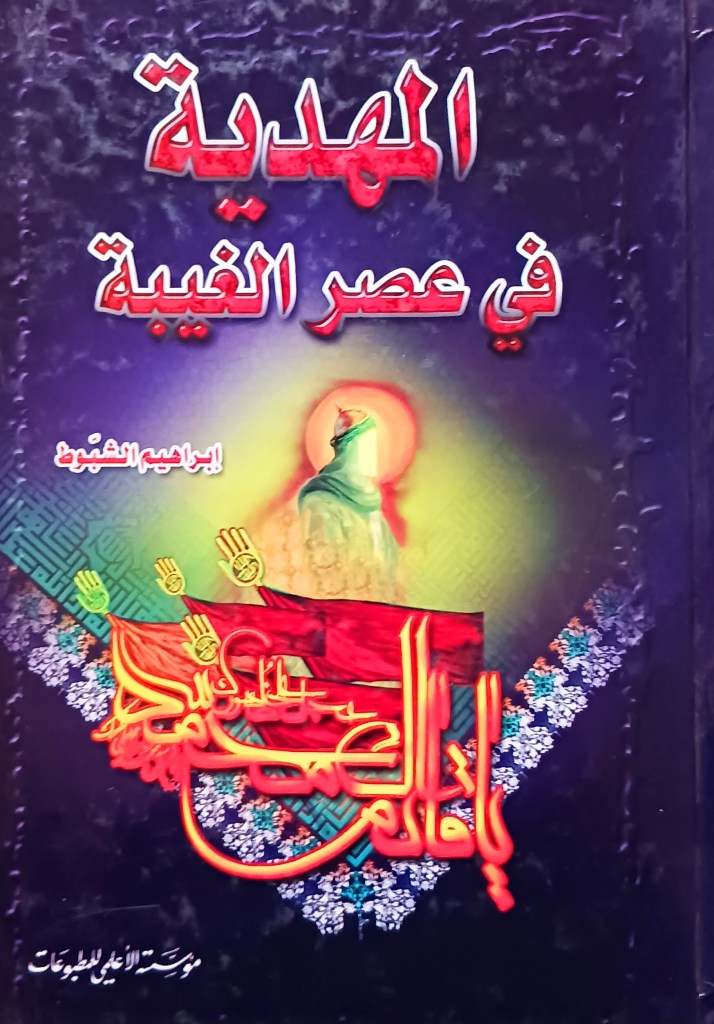
Mahdism has been a hugely potent strain in the world’s second-largest religion for over a millennium, as I outlined in this article (and in several of my books). Men claiming to be the Mahdi are often a thorn in the side of established rulers–as al-Yamani appears to be for Baghdad. Perhaps his followers were violent; or the Iraqi government simply needed to put him away, as a political and religious irritant, and ginned up accounts of planned assassinations. But arresting such figures is usually insufficient to stop their movements, as the Mahdist imperative is deeply embedded in both Shi`i and Sunni Islam and serves as a powerful tool for combating perceived unjust rulers.
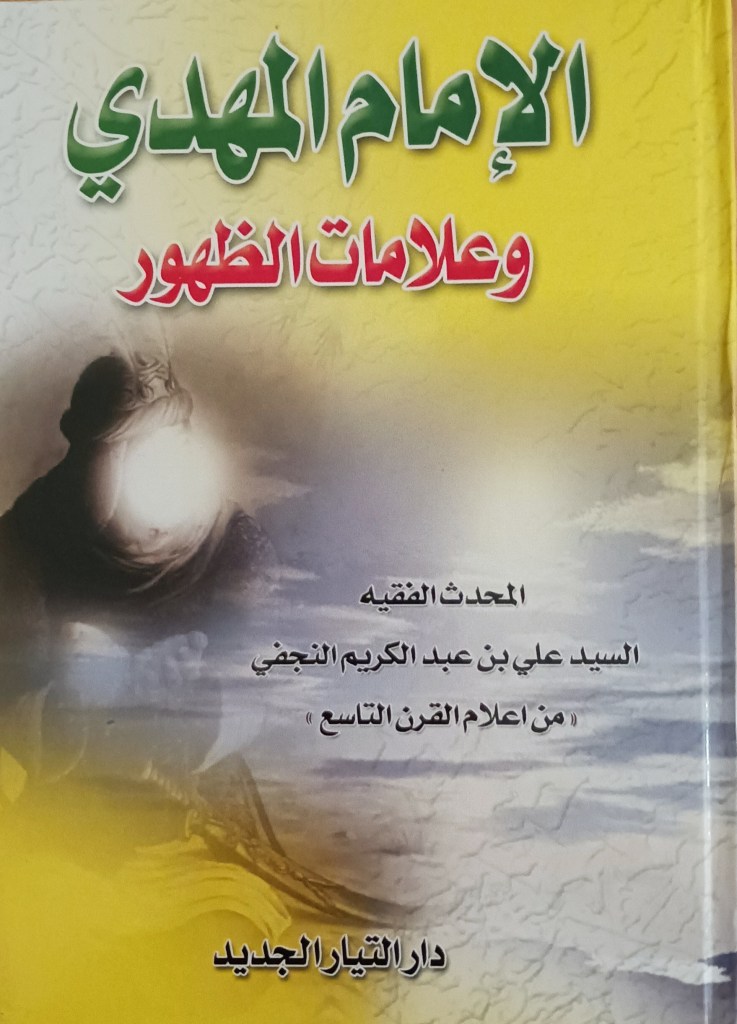
Imam Mahdi and Signs of the Appearance: one of my many Arabic books on this topic.
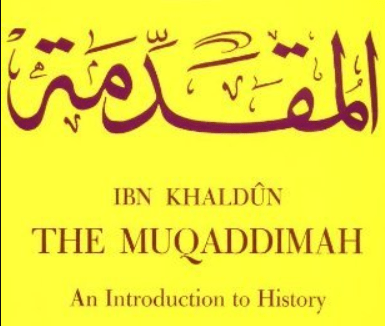
Western civilization has become spineless. This happens to all cultures, eventually—as described first, ironically, by the great 14th century North African Muslim historian Ibn Khaldun in his work The Muqaddimah. Ibn Khaldun, based on his study of ancient, Islamic and Christian history, ascertained a cyclical pattern of rise-and-fall among what he termed “dynasties” which, mutatis mutandis, is applicable to our culture as well. All of them go through three phases:
[1] The first is the one which establishes the society: “its members are used to privation and to sharing their glory with each other; they are brave….sharp and greatly feared. People submit to them.”
[2] Following that is the stage in which the society moves “from privation to luxury and plenty” and “the vigour of group feeling is broken…. People become used to lowliness and obedience. But many of the old virtues remain” and the people “live in hope that the conditions that existed in the first generation may come back, or they live under the illusion that those conditions still exist.”
[3] The final generation “has completely forgotten the period of…toughness, as if it had never existed…. because they are so much given to a life of prosperity and ease. They…are like women and children who need to be defended. Group feeling disappears completely….. When someone comes and demands something from them, they cannot repel him.”
The fourth phase, then, is the conquest of the civilization by another that is still in the robust, determined and, yes, dangerous phase.
Watching President Trump’s address to a joint session of Congress last night, and the Democrats’ reaction to it, reminded me of Ibn Khaldun’s typology. His first category describes traditional America, and what Trump+ MAGA hopes to resurrect; his second, establishment Republicans and “liberal” Democrats; the third, modern Leftists. The latter two now have far more in common with one another than either has with the “toxic masculinity” of the first–hence the hatred evinced by “Never Trump” Republicans and most Democrats towards those of us who hope and pray that Trump can indeed make America great again–which is the only way it will survive the Marxist and Muslim onslaught trying to destroy Western civilization in general, and this country in particular.
[Since I haven’t done so for some time, allow me to present a brief tutorial on Islamic eschatology, especially Mahdism, Islam’s brand of messianism.]
As the end times unfold, with civilization and “true religion” (Islam) crumbling, several familiar evil entities from the book of Revelation will appear:
al-Dabbah, “the Beast;”
Yajuj wa-Majuj, “Gog and Magog;”
al-Dajjal, “the Deceiver” or antichrist, who will lead the armies of darkness (non-Muslims, especially Jews).
Then `Isa (Jesus) will return, having been taken to Heaven while still alive in the first century. He will kill the Dajjal and then support the main Islamic eschatological figure, the divinely guided al-Mahdi, as he takes over the world and establishes a global caliphate.
Belief in the Mahdi Transcends Muslim Denominational Differences
While the doctrine is intrinsic to Twelver Shi`ism (and formally incorporated into the government in the largest Twelver state, Iran), it’s less institutionalized in Sunnism — but still quite strong, as Pew data on this topic has shown. The biggest difference is that for Twelver Shi`is, the Mahdi has already been here as the twelfth imam, or leader, of their community, descended from Muhammad. However, he “disappeared” in the ninth century AD and will return as Allah deems appropriate — when Islam’s need is dire.
For Sunnis, the true Mahdi will step onto the stage of history as a great Muslim military and political leader, whose successes will eventually reveal him as Allah’s anointed.
The Devil in Disguise? Or a Mahdi with Whom You Can’t Help Falling in Love? Depends on Which Hadith You Follow [Actually a screenshot from the Elvis movie Harum Scarum!]
Many Mahdis in Islam’s Past
So for the Muslim world writ large, neither Mahdi has come yet. But there have been legions of pretenders to the throne across the centuries in both Sunni and Shi`i societies, many of whom gained a considerable following — and some of whom actually seized power. (I examined eight of the most prominent Sunni ones in Holiest Wars.)
Perhaps the most successful was Ibn Tumart, the twelfth-century Mahdi who convinced many people of his calling and took over much of what is now Morocco and Algeria.
Another such leader, Ibn Abu Mahallah, cropped up in the early seventeenth century in the same region, but fared less well. Ditto for the late nineteenth-century Mahdis in Algeria, who mainly fought the French.
In late fifteenth-century India, Muhammad Jawnpuri claimed the title and led warriors against the Mughal Empire. So did Sayyid Ahmad Barelwi in late nineteenth-century India.
The second most effective Mahdi was Muhammad Ahmad of Sudan, whose 1880s movement threw out the Ottomans and British (led by Major General Charles Gordon) and established a state that lasted until 1898. In early Republican Turkey, a chap named Mehmet declared himself the Mahdi but was quickly squelched by the Turkish Army.
The most recent alarming outbreak of Mahdism was in the Kingdom of Saudi Arabia (KSA) in 1979, when armed followers of Muhammad al-Qahtani took over the Great Mosque of Mecca and called for the overthrow of the Saudi royal family. They were eventually put down by hired French forces.
Also Many Mahdis in Modern Islam
But since then, several other self-proclaimed Mahdis have materialized in the Muslim world. (I have written about 11 of these in the last six years at my website, The Occidental Jihadist.) Two were in the KSA, two in Egypt, one each in Bangladesh, Iraq, Morocco, and Sudan — and four in Turkey , the latest in October 2024, when Mustafa Çabuk, “declared himself the Mahdi.” This was in northwestern Turkey, the same area where Mehmet, the Mahdi in 1930, lived.
Çabuk had some 200 followers, who took “loyalty oaths” to him as Mahdi. He and 20 of them were arrested on “charges of establishing a criminal organization for profit and qualified fraud.” After being charged, “the false Mahdi Mustafa Çabuk” was taken to Istanbul and “admitted to Bakırköy Mental and Neurological Diseases Hospital to determine whether his mental health was intact.”
However, the plot thickens with Çabuk. Besides his crimes against Islam and Turkish law, he and his Mahdists were charged with “conducting illegal excavations.” For what? According to an Oct. 11 story [2024] on the English-language version of the Turkish news site Haberler.com:
The suspects were searching for an ‘ark of the covenant’ in the area they dug. The suspect Mustafa Çabuk, who claims to be the Mahdi mentioned in the hadiths, alleges that the location of the ark was revealed to him by angels.
Turkey is still secular (officially). Yet according to the aforementioned Pew polling, it has the third-highest number of people (68%) who believe in the Mahdi’s imminent return — trailing only Afghanistan and Iraq.
Turkey isn’t some barren, bleak, fundamentalist-ruled backwater like Afghanistan. It’s a modern country with the second-largest military in NATO, enormous cachet in the Muslim world as the heir to the Ottoman Empire, and the largest non-oil-based Muslim economy in the Middle East. Self-styled Mahdis in much poorer and weaker states have wreaked havoc. Imagine what such a leader could do at Turkey’s helm.
Islam’s messianic heresy of Mahdism has proven to be both a political and military problem for Muslims and their neighbors for centuries. The belief is deeply embedded in Islam, and it isn’t going away.
One final note: Mahdis tend to appear at the approach of a new Islamic century. November 28, 2076 will be New Year’s Day, Hijri year 1500. So over the next 52 years, we can expect to see a plague of Mahdis. Let’s hope they remain to be one-offs consigned to mental hospitals. But if history is any guide, they won’t be.
Terrorists run rampant in the modern world, from al-Qa`idah to Sendero Luminoso. Most (78%, according to our own State Department list) are Islamic. The US has never really devised a coherent, consistent counter-terrorism policy for dealing with such–in part because many of these movements qualify as Muslim insurgencies, which require a different analytical lens and counter. The Ottoman Empire, for half a millennium, was beset by such problems. (Ditto for its successor state, the Turkish Republic.) I wrote an entire book on this topic, which our policy makers NEED to consult. So I’ll make it easier for them by posting, below, the interview which the analytical shop Wikistrat did with me on this topic.
Precis: Some major observations which I hope folks can take from this book are that there is really little, if nothing, new under the sun in terms of Islamic insurgencies; that the Ottoman Sultans faced opposition very much like today’s ISIS and AQ; that Ottoman COIN was as much ideological as kinetic, needing not just steel and hunger (as Julius Caesar said) to defeat rebels, but ink—for fatwas; and that Mahdism (Islamic messianism) “was perhaps the most potent, and prevalent, type of insurgency” (p. 280).
Wikistrat–Sep 25, 2020 (Updated: Sep 20, 2023)
Wikistrat: You mention you are a historian of the Islamic world, not the Ottoman Empire specifically. What compelled you to write this book, and what do you hope our experts in Wikistrat’s ME community will come away with?
TF: I studied the Ottomans at some length, as well as the Ottoman Turkish language, in my doctoral work at Ohio State. So, while I ultimately specialized in eschatological movements across space and time, using Arabic sources, I retained a keen interest in the Ottoman Empire. In recent years I have worked at US Special Operations Command, where I became familiar with the field of counter-terrorism and counter-insurgency (COIN); in addition, I have taught history of terrorism, and military history, at Reinhardt University in Georgia. Both experiences showed me that US analysts and policymakers rarely look beyond Western examples of COIN: Rome, Napoleon, the Brits, or Americans in Vietnam, Iraq, Afghanistan. There are a few non-Western studies—on the Egyptians in Yemen in the 1960s, for example—but I could only find one on the Ottoman experience, and that just during World War I. This struck me, considering that I knew the Ottoman Empire faced many insurgencies in its half-millennium of rule in the Middle East, Southeast Europe, and northeast Africa. So, since Ottoman historians are generally ignorant of unconventional warfare, and the chaps at SOCOM don’t know much about the Ottomans, I decided to do what I could to bridge a gap in the scholarship.
Some major observations which I hope folks can take from this book are that there is really little, if nothing, new under the sun in terms of Islamic insurgencies; that the Ottoman Sultans faced opposition very much like today’s ISIS and AQ; that Ottoman COIN was as much ideological as kinetic, needing not just steel and hunger (as Julius Caesar said) to defeat rebels, but ink—for fatwas; and that Mahdism (Islamic messianism) “was perhaps the most potent, and prevalent, type of insurgency” (p. 280). In fact, chapter four is my counter-example one, wherein I look at the medieval North African Almoravid (al-Murabitun) state, which was challenged and ultimately overthrown by the Almohad (al-Muwahhidun) Mahdists. I analyze why the Almoravids failed when the Ottomans succeeded.
Wikistrat: Your target audience is military and government professionals who study warfare and COIN (counter-insurgency), as well as the general public. What events or processes in the long and fascinating history of the Ottoman Empire stand as out as most relevant to your intended audience?
TF: I examine seven primary insurgencies against the Empire across space and time: Sufis, Celalis, Kadizadelis, Druzes, Zaydis, Wahhabis, and Sudanese Mahdists. Six of those were based in Islam itself or in a heterodox/heretical movement thereof (the Celalis, basically disgruntled soldiers, are the lone exception). I consider the Kadizadelis, Zaydis, Wahhabis, and Sudanese Mahdists the most relevant to the modern world. Kadizadelis were 17th century Ottoman Islamic fundamentalists, who hoped to change the system sans violence. They thus resemble, for example, today’s Hizb al-Tahrir or Muslim Brotherhood. The Zaydis of Yemen fought imperial control because they detested both foreign and Sunni rule. The Zaydis are still fighting the same two-pronged struggle.
The Wahhabis have their own state now—the Kingdom of Saudi Arabia—but have spawned their own problematic offshoots in the guise of ISIS, AQ, and similar groups. And the same eschatology which drove Muhammad Ahmad in 19th century Sudan to declare himself the Mahdi is at work in a number of places in the Islamic world—most overtly ISIS, but also in Turkey where, just last year, a senior advisor to President Erdogan was fired for stating publicly that his defense contracting company was helping prepare the way for the Mahdi’s coming. And don’t forget that the 1979 attempt to overthrow the Saudis was led by a self-styled Mahdi.
Again, for these four insurgencies, in particular, we see that the Ottomans had already dealt with opposition movements that look very much like what our allies in the Islamic world face today. A modern paradigm provides for four COIN outcomes: insurgent victory, government victory, driving insurgents to turn into criminals/terrorists, or assimilating insurgents back into the system. The Ottomans had experience with all but the third—which, again, can be instructive for today.
Wikistrat: Studying insurgencies against Ottoman rule, particularly the 16th-17th century Druze uprisings, can you draw any parallels with Turkey’s response to internal resistance to Erdogan’s consolidation of power? Or Turkey’s response to Kurdish resistance inside the country and across the border in Syria?
TF: Actually, if I may, I think a better analogy for what’s going on inside Turkey today, in terms of resistance to Erdogan’s rule, would be the Kadizadeli movement. That group did not actually wage jihad against Istanbul, as most of the others did; rather, its adherents tried to change the Ottomans’ favoring of Sufis in imperial administration and to make the government more starkly pious (according to their own standards). With this challenge in particular, the Sultans responded not with shock and awe, as was the default position for other COIN operations, but with what I deemed “shock and law.”
The Diyanet (Turkish Religious Authority) puts out lists of organizations deemed a threat to the Republic, and literature delegitimizing them. Should that prove insufficient, members are arrested. This includes individuals such as Adnan Oktar and would include Fetullah Gülen if the Turkish authorities could pry him out of Pennsylvania. On the other hand, Kurdish groups that have taken up arms against Ankara are treated much as the Ottomans would have any separatist groups—which would not have included the Druzes, who disliked Ottoman taxes but never really tried to break away to create their own Druze state.
Perhaps the Kurds in modern Turkey thus most resemble the Zaydis—not in the brand of Islam (since Kurds are Sunnis), but in that they are a separate ethnolinguistic group chafing under Turkish rule.
Wikistrat: Would you describe Erdogan as neo-Ottoman, and if so, what “Ottoman predilections” in your opinion have reemerged in Turkey’s current government?
TF: I think it’s hyperbolic to refer to him that way. Yes, the Turkish president wants the Republic to be less secular and more Muslim, exemplified by prevailing upon the Turkish legal system to allow Hagia Sophia to function as a mosque again. He also wants to extend Ankara’s influence into the old Ottoman “near abroad.” And he clearly sees Turkey as the leading Islamic nation—not illogically, considering it still retains, to some degree, the Ottoman cachet. But he wins elections, which no Sultan ever did. He and the AK Party are suspicious of Sufism, whereas Sufis were entrenched in the Ottoman government and military. Finally, while seemingly sympathetic to the Muslim Brotherhood on the international scene, Erdogan is not trying to turn Turkey into Saudi Arabia or Iran. He’s probably like to be elected, or proclaimed, caliph—but that would be, for him, more a civilizational than a religious position.
I say in the book that Turkey, even under Erdogan, “remains the most moderate Islamic influence—and thus the one with the most potential to delegitimize Islamic terrorists” (p. 282).
In recent years I’ve written 14 articles dealing with terrorism/counter-terrorism and national security strategy (in addition to an entire book on Middle Eastern counter-insurgency, as practiced by the Ottoman Empire and drawing lessons for US policy today):
Here are my 66 articles about geopolitics (to include Islam/the Middle East, terrorism/counter-terrorism, foreign and military affairs) published at The Stream in the last few years (out of 153 total). Yes, I use cultural references, some tongue-in-cheek–but embedded in solid analysis of each topic.
Since 2005, my favorite show on television has been Supernatural. It ran for 15 seasons and 327 episodes, finally finishing in fall 2020. I missed most of the last season (which ran at the height of Covid), but recorded it. Slow to return to watching, I lost the episodes when the AT&T repairman updated our DirectTV and deleted them. I got them again thanks to TNT network, which runs Supernatural in syndication–but had to wait for the final season to cycle around again. Last night I stayed up till 2:30 AM and watched the final four episodes. And since I spent so many years invested in the show, I decided to provide my take on it.
The show started with brothers Sam and Dean Winchester as monster hunters, weekly taking down supernatural threats which proved all-too-real: vampires, werewolves, shape-shifters, wendigos, witches, etc. Very soon demons were introduced, and then in season four angels. As the years went on, the Winchester brothers, their extended family, and a host of hunter allies (American and foreign) found their enemies ramped up, to a cosmic scale. Leviathans, the Four Horsemen, Reapers, Death–and finally God Himself, a potent but petty deity who frankly enjoyed being a puppeteer and watching his creations, especially Sam and Dean, twist in the wind.
The show could be deadly serious, but also funny as hell. Sometimes in the same episode. In one an archangel made the brothers live the same day over and over (as Dean once said, “angels are dicks”), and Dean died a different way each day. Once by having a piano fall on him. The Winchesters also often impersonated FBI agents, using names like “Plant and Page” or “Hamill and Ford.” But entire episodes could be funny, like “ScoobyNatural,” which had Sam, Dean and their angel friend Castiel sucked into an episode of Scooby Doo, where they helped the Scooby gang fight a ghost and in which Dean’s attempts to hit on Daphne failed miserably. But quite often Supernatural was somber, bordering on grave (pun intended).
The acting was top notch. Jensen Ackles as Dean and Jared Padelecki as Sam were amazing. But also Misha Collins as angel Castiel, Jim Beaver as surly, surrogate father Bobby Singer, Mark Pellegrino as Lucifer, Mark Sheppard as demon Crowley, Rob Benedict as Chuck/God, and Richard Speight Jr. as angel Gabriel/Loki (he also directed a number of episodes). Boomers like me also appreciated the regular usage of classic rock in the show: Bob Seger, AC/DC (“Highway to Hell,” of course!), Ted Nugent, Aerosmith, Metallica, to name just a few. (Although they did mellow it up a bit at least once, with Gordon Lightfoot’s “Sundown.”) Most notably Kansas’ “Carry on My Wayward Son,” which for 14 of 15 seasons played during each finale episode. The characters (at least the main ones) were fleshed out and you actually cared about them. The writing and dialogue were also uniformly excellent, once the show hit its stride in season three.
I have two overwhelmingly favorite episodes. “Jus in Bello,” in which Sam and Dean are arrested by an FBI agent who thinks they’re killers making up stories about monsters–until the jail where they’re being held is besieged by a horde of possessed people. The brothers are let out of their jail cell and help law enforcement hold off the demoniacs–until Sam and Dean leave, whereupon a powerful demon shows up and kills the survivors. The other is “Hammer of the Gods,” which sees the Winchesters kidnapped by a bunch of pagan gods–Graeco-Roman, Norse, Hindu–hiding out in a hotel and trying to figure out a way to stop the (pseudo-Christian) Apocalypse. The “gods” decide to try and fight, Kali opining that it’s “Western arrogance” that their God (and devil) cannot be defeated. Sam and Dean agree to help them, but Lucifer shows up and kills all the old gods, after telling them “You’re such…petty little things. Always fighting, always happy to sell out your own kind. No wonder you forfeited this planet to us.” Fortunately for the Winchesters, another angel, Gabriel, had showed up and transported them to safety.
Supernatural was entertaining, thoughtful, scary, poignant, and often funny. No wonder it has one of the most dedicated fanbases in TV history; one which the writers and cast pointedly recognized, and even incorporated. But it was decidedly NOT Christian. The show’s “God” is more like a Platonic demiurge. He created this universe, as well as multiple others, but–as even Lucifer says–he “has no love to give.” He cares nothing at all for his creation, even the sentient beings. They’re just for his amusement. Oh, and God has a sister, Amara, who usually opposes him. The archangels Michael and Lucifer are God’s “sons,” with the latter being the senior. As for Jesus, well, despite the many times we see churches with crucifixes, “he was just a man”–as one character tells an overtly Christian truck driver. Of course, if Christ were presented as He actually is–THE Son of God, Second Person of the Trinity, conqueror of Satan–then the show’s whole cosmic mythology would go up in smoke. And making it overtly Christian would no doubt have driven away legions of atheist and agnostic fans, for whom that would have been a belief too far.
In the penultimate episode, the brothers, helped by their good friend Jack–the powerful son of Lucifer, raised by the Winchesters and Castiel–defeat God, strip him of his powers, and install Jack as the new deity, who then proclaims “people won’t need to pray to me or sacrifice to me. They just need to know that I’m already a part of them, to trust in that. I won’t be hands-on. [God] wrote himself into the story, and that was his mistake.” Humans will have to create the meaning in their lives, as well as any virtues like love, honor, loyalty. Each person will have to be his own Űbermensch . In the real world, however, God writing Himself into the story with His Incarnation in Jesus Christ is the greatest positive event in history. And it is the Holy Trinity that determines good and evil. Not us.
Don’t get me wrong–I loved Supernatural. I think it’s one of the greatest shows in TV history. (Except for how the writers killed off Dean in the very final episode. It ranks right down there with the death of Captain Kirk in Star Trek: Generations.)
The RSF logo, with its name on top and, below, the words “Equipped. Swift. Decisive.” Interestingly, this logo no longer has the word “Quds,” “Jerusalem, which the former one sported. (“Emblem of the Rapid Support Forces,” Wikipedia, Public Domain.)
The Mahdi, for those who might not know, is Islam’s primary eschatological figure who will be sent by Allah to conquer the whole world. While more institutionalized in Shi`i Islam, the belief also exists in the larger Sunni world–thanks to a considerable number of hadiths (sayings of Muhammad) which predict his coming. And Sudan was the site of one of the most successful Mahdist movements in history: that of Muhammad Ahmad, who declared himself the Mahdi in 1880 and went on to lead a movement that conquered Sudan before his death in 1885. And which lasted until 1898, when it was destroyed by the British Army.
I do track modern Mahdist irruptions on this site, whenever they occur (see the archives). Sunni Mahdism shows up most often today as the domain of one-off madmen. But sometimes such transform into actual movements. The aforementioned Muhammad Ahmad. And, more recently, that of Juhayman al-Utaybi and his (puppet?) Mahdi, Muhammad al-Qahtani, in 1979 Saudi Arabia. (For more on eschatological rebellions, especially against the Ottoman Empire, see my 2020 book: The COIN of the Islamic Realm: Insurgencies and the Ottoman Empire, 1416-1916.)
Bottom line: while Mahdism has, historically, been prevalent in African Islam, that’s not the ONLY place it occurs; and while it’s often used as a populist-religious means of bolstering a leader’s legitimacy, it also can become a fervent belief. And that’s when Mahdism becomes quite dangerous.
“Muhammad Ahmad.” If only modern wanna-be Mahdis were so striking and dapper. (From “Muhammad Ahmad,” Wikipedia, Public Domain.)