My Crusade against (the term) “Islamism”

Back in 2023, I wrote a piece for The Stream entitled “A Jihad on the Term ‘Islamism.'” That article no longer works at the archived site, so I am reposting it here, since so many (even conservatives) need to learn why they should avoid the term.

“A Jihad on the Term ‘Islamism’”—Tim Furnish (2023)

I am hereby declaring a jihad on the word “Islamism.

The term is pervasive. Google it. You’ll get 40 million hits. Over 46 million for one who practices it, an “Islamist.” Writers and analysts of all political persuasions use these terms. Here are some examples from the Right. Dennis PragerKatherine Gorka (wife of Sebastian), the Trump Administration (in its National Security Strategy, no less), Greg Gutfeld, even The Stream. The Left deploys them probably even more frequently. NPRThe AtlanticWaPo/CNN, the Council on Foreign Relations, our deep state, the “Global Media Style Guide on Islam.

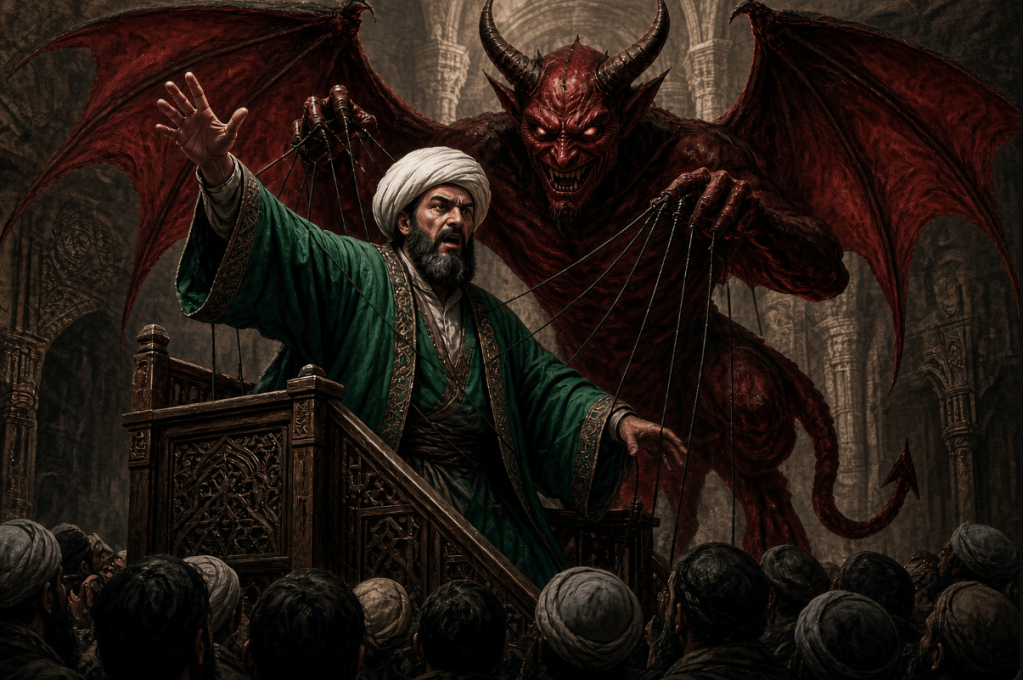
Both sides of the aisle can’t be wrong, can they? Actually, yes. Here’s why. Both conservatives and liberals/Leftists use “Islamism” as a way to differentiate political Islam from allegedly mainstream Islam. But Islam is inherently political. More so than any other religion on earth. “Islamism” and “Islamist” disguises that. What’s wrong with that? It allows the world’s second-largest religion plausible deniability for its legions of political activist and revolutionaries. It allows apologists to say “they’ve corrupted Islam.” (Much the same argument as is made regarding jihadists.)

When I was in graduate school at Ohio State in the 1990s, “Islamism” had a narrow meaning. The ideology of late 19th/early 2oth century “Islamic modernists.” Mainly in Egypt and Iran. These activists tried to fuse Western political ideas, like democracy, with the Quran. This approach was one of three to Western imperialism and dominance in the Muslim world.

There were two other reactions. One copied Western secularist governments. The Turkish Republic led the way here. On the other end of the spectrum, fundamentalists rejected Western ideas. They favored the idea of Islam al-hall. “Islam is the solution.” Muslims could fix their society by returning to the Quran and hadiths (collected sayings of Muhammad). And putting those teachings into practice. The Wahhabis of Arabia and Deobandis of India typified this strategy.

Now, a century later, here’s how those three approaches have shaken out. Western-style secular governance is almost dead in the greater Middle East. Even Turkey has been re-Islamized. Fundamentalism is stronger than ever, especially in many Sunni countries and regions. Saudi Arabia, Yemen, Pakistan, Afghanistan, northern Nigeria, Sudan. Anywhere that Islamic law is enforced. So what about “Islamic modernism?” It survived in groups like the Muslim Brotherhood. And Turkey’s ruling AK (“Justice and Development”) party.

But a funny, and unfortunate, thing happened to that former middle way. It’s been assimilated to the fundamentalist Islamic strain. At least politically. This happened to the Muslim Brotherhood decades ago. Now it wants Muslims to institute Islamic rule. As such, the Muslim Brotherhood has the same goal as Islamic State or al-Qa`idah. The only real difference is that the MB officially eschews violent jihad. (And its leaders’ beards tend to be shorter than those of IS or AQ.) Of course, MB’s offshoots like Hamas openly embrace jihad.

Granted, not all transnational Islamic organizations (MB-derived or not) are jihadist. But all share the same goals: more Islam in public life, to include the legal system and government. There are three major organizations in this regard. The MB. Hizb al-Tahrir (HT) dedicated to bringing back the caliphate. And the massive Gülen movement of Turkish Sufism (Islamic mysticism). All are very political.

And why wouldn’t they be? Islam is at its very heart political. Much more so than Christianity.

“The Founder of Christianity bade his followers ‘render unto Caesar the things which are Caesar’s, and unto God the things which are God’s.’” (Matthew 22:21) It was not until Roman Emperor Constantine that Christianity became political. On the other hand, “the Founder of Islam was his own Constantine, and founded his own state and empire. … The dichotomy of regnum and sacerdotium, so crucial in the history of Western Christendom, had no equivalent in Islam.” (Bernard Lewis, The Crisis of Islam, p. 6.) Muhammad’s successors, the caliphs, were not just heads of state, but Allah’s deputies. And their main role — or that of any lesser Muslim potentates, such as a sultans — was to extend Islamic rule over all non-Muslims. Bernard Lewis, again: in Islam political authority is a “divine good” (The Political Language of Islam, p. 25) and should be seized at every opportunity. Not something that risked endangering one’s immortal soul, as in Christianity.

The ayatollahs certainly seized their opportunity in 1979 Iran. Scholars often try to claim the Islamic Republic’s governmental and legal systems owe more to the French political theorist Auguste Comte than to the Quran. But the IRI’s staunch Shi`i roots are 500 years deep. And it wasn’t the Frenchman who came up with flogging for cross-dressing, amputation for theft and stoning for adultery. It was Muhammad and his modern epigone, the Ayatollah Khomeini.

The IRI is Islamic political thought in modern Western garb. Ditto for the MB, HT, Gülenists and AK party members. There are no discernible political differences between these five organizations and the 55 Islamic terrorist groups listed by the U.S. State Department. There are disagreements about how, when, and how much to employ jihad in realizing political goals. To what degree, perhaps, the ends justify the means. But the ends of MB and HT are the same as those of IS and AQ. World government under Islamic law, administered by a caliph.

So why pretend otherwise? Which is what referring to such Muslims as “Islamists” does. They’re simply Muslims. And “Islamism” is just fundamentalist Islam. In this case, “thy name well fits thy faith” (Cymbeline, Act V, Scene 2).

Mapping the Current Terrorist Terrain

Some know that the US government, specifically the State Department’s Bureau of Terrorism, maintains a “Foreign Terrorist Organization” list. I regularly consulted it when I was working as an analyst at US Special Operations Command, and a bit later when I taught a history of terrorism class to undergraduates. I last analyzed that list two years ago. I decided to do so again today after reading a perspicacious X post by the former Muslim @DanBurmawy, in which he pointed out–quite accurately–that modern Sunni Islam is far more violent than (Twelver) Shi`ism.

What follows is a breakdown of that FTO list, which was most recently updated very recently–July 8, 2025–when Hay’at Tahrir al-Sham (HTS)/Jabhat al-Nusrah was delisted by the Trump Administration because that organization is now the de facto government of Syria. (For more detail on this topic, see this article.)

Major data points:

  • There are 78 total groups listed
  • 54 (69%) are Islamic
  • 47 of the 54 Muslim ones are Sunni, only 6 are Shi`i (five Twelver, one Fiver/Zaydi, in Yemen); one is Sufi
  • Next to Islam, the most prevalent ideology (if you can call it that) is Central/South American drug dealing with 9 groups (including Haitian gangs raises the level to 11)
  • Marxism comes in as the motivation for 8 organizations
  • Nationalism is behind 4 groups: two Irish, one Palestinian, one Sri Lankan
  • There’s one weird outlier: a Greek anarchist organzation.

As for location:

  • Largest contingent thereof is in Africa: 17, or 22%
  • South Asia (Pakistan, India, Afghanistan, Bangladesh) is second with 13 groups (17%)
  • Mexico and the Palestinian territories are tied with 6 groups each.

Some of these groups haven’t been active for years. Revolutionary Struggle, the Greek anarchist one, hasn’t done anything since 2016. The Continuity Irish Republican Army hasn’t done much but quaff pints and bitch about the Brits for a decade. Asbat al-Ansar, formerly a bunch of Palestinian Sunnis in a Lebanese refugee camp, has been moribund for two decades. So these groups should probably be delisted as well, going the way of Aum Shinrikyo and Kahane Chai.

The ideological percentages changed considerably when the Trump Administration added eight Latin American drug cartels to the list shortly after taking office. Just two years ago, Muslim groups made up 81% of the list. So they can thank the cartels for that change.

Still, Islamic terrorism (not “Islamist”) is the most prevalent type on planet Earth.

He was probably Sunni, NOT Shi`i.

From Yemen With Hate?

Seventeen years ago I was writing posts over at my old site Mahdiwatch about an Iraqi Shi`i Mahdist movement centered around one Ahmad al-Yamani. I even interviewed him virtually at one point, although I have since lost the notes. As near as I could ascertain, al-Yamani was claiming to be a representative, or herald, of the coming 12th Imam al-Mahdi–sort of a John the Baptist figure, mutatis mutandis. He also said that his movement was peaceful, although even then the Iraqi government alleged his followers were actually violent.

His Ansar al-Mahdi had not been heard from much in the intervening years. But two days ago, Shafaq News (an Iraqi, pro-Kurdish site) reported that Ahmad bin Hasan al-Yamani, “a senior leader of the Al-Yamani Movement in Najaf province” had been arrested. He was described as “the chief strategist behind the group, which has called for attacks on top religious figures.” Al-Yamani “had evaded capture for years.” The article went on to state, confusingly, that al-Yamani had claimed BOTH to be the “deputy of the Mahdi” AND “the first of twelve Mahdis who follow the twelve Imams.”

In mainstream Twelver Shi`ism "al-Yamani" (the Yemeni) is indeed an eschatology-adjacent figure who comes from Yemen and prepares Muslims for the arrival of the actual Mahdi, the End Times leader who will, along with the returned Muslim Jesus, bring the whole world under the sway of Islam. (This bit in the article about 12 Mahdis makes no sense. In Twelver Shi`ism, the the 12 Imams are descendants of Muhammad through Ali’s line, the final one of which will be the eschatological Mahdi. There are not 12 Mahdis in this branch of Islam.)

Mahdism has been a hugely potent strain in the world’s second-largest religion for over a millennium, as I outlined in this article (and in several of my books). Men claiming to be the Mahdi are often a thorn in the side of established rulers–as al-Yamani appears to be for Baghdad. Perhaps his followers were violent; or the Iraqi government simply needed to put him away, as a political and religious irritant, and ginned up accounts of planned assassinations. But arresting such figures is usually insufficient to stop their movements, as the Mahdist imperative is deeply embedded in both Shi`i and Sunni Islam and serves as a powerful tool for combating perceived unjust rulers.

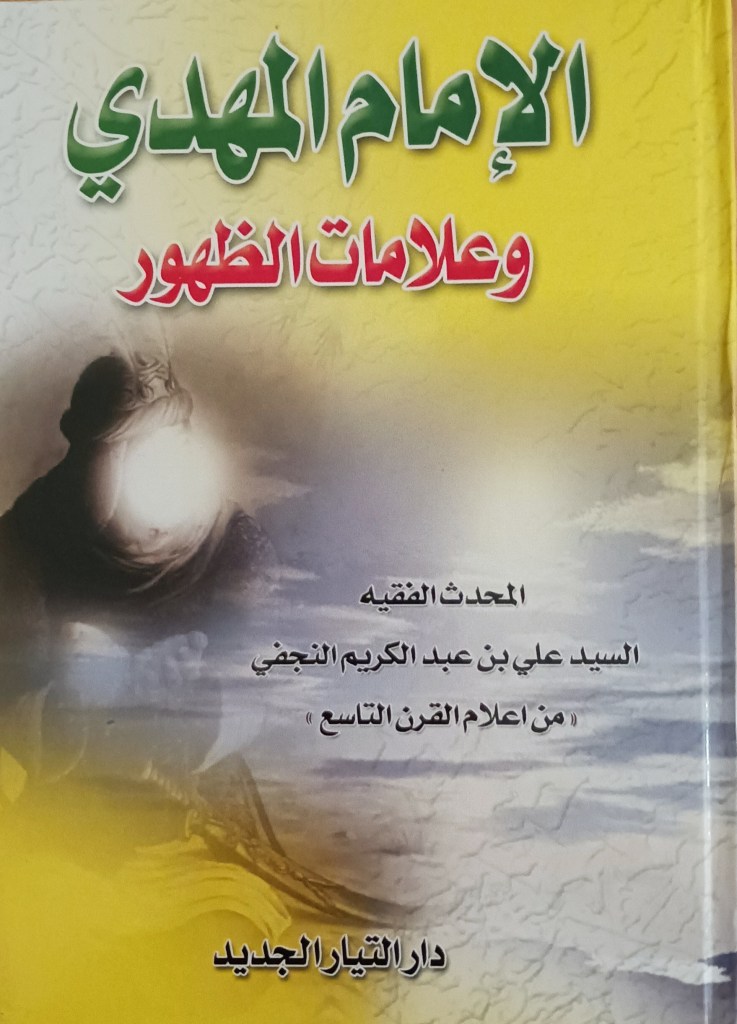
Imam Mahdi and Signs of the Appearance: one of my many Arabic books on this topic.

Trump’s new MAGA: Making “Al-Muqaddimah” Germane Again!

Eight years ago I wrote “An Arab Muslim’s Prediction About the Fall of Western Civilization.” The gist of it was the following:

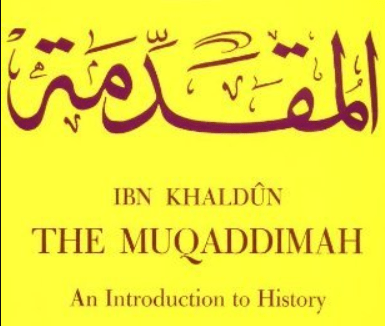
Western civilization has become spineless. This happens to all cultures, eventually—as described first, ironically, by the great 14th century North African Muslim historian Ibn Khaldun in his work The Muqaddimah. Ibn Khaldun, based on his study of ancient, Islamic and Christian history, ascertained a cyclical pattern of rise-and-fall among what he termed “dynasties” which, mutatis mutandis, is applicable to our culture as well. All of them go through three phases:

[1] The first is the one which establishes the society: “its members are used to privation and to sharing their glory with each other; they are brave….sharp and greatly feared. People submit to them.”

[2] Following that is the stage in which the society moves “from privation to luxury and plenty” and “the vigour of group feeling is broken…. People become used to lowliness and obedience. But many of the old virtues remain” and the people “live in hope that the conditions that existed in the first generation may come back, or they live under the illusion that those conditions still exist.”

[3] The final generation “has completely forgotten the period of…toughness, as if it had never existed…. because they are so much given to a life of prosperity and ease. They…are like women and children who need to be defended. Group feeling disappears completely….. When someone comes and demands something from them, they cannot repel him.”

The fourth phase, then, is the conquest of the civilization by another that is still in the robust, determined and, yes, dangerous phase.

Watching President Trump’s address to a joint session of Congress last night, and the Democrats’ reaction to it, reminded me of Ibn Khaldun’s typology. His first category describes traditional America, and what Trump+ MAGA hopes to resurrect; his second, establishment Republicans and “liberal” Democrats; the third, modern Leftists. The latter two now have far more in common with one another than either has with the “toxic masculinity” of the first–hence the hatred evinced by “Never Trump” Republicans and most Democrats towards those of us who hope and pray that Trump can indeed make America great again–which is the only way it will survive the Marxist and Muslim onslaught trying to destroy Western civilization in general, and this country in particular.

Another Mahdi in Sudan?!

While the world has been focused on conflicts in Ukraine and Israel, a bloody civil war has been raging in Sudan for the last year–one that has killed over 14,000 Sudanese and displaced millions. The government (such as it is), headed by Army general Abdel Fattah al-Burhan, is fighting against its former proxy, the “Rapid Support Forces” (Quwwat al-Da`m al-Sari`), led by Muhammad Hamdan Dagalu. The RSF, formed some years ago from provincial nomads, previously helped Khartoum against rebels and separatists. But last year its members decided to take over the country, and in fact control large sections of Sudan–to include the capital. Egypt and Iran (?) are said to be backing al-Burhan and the army, while the UAE is supporting Dagalu’s RSF. As too, allegedly, is Russia–which wants access to Sudanese gold to help offset Western sanctions.

The RSF logo, with its name on top and, below, the words “Equipped. Swift. Decisive.” Interestingly, this logo no longer has the word “Quds,” “Jerusalem, which the former one sported. (“Emblem of the Rapid Support Forces,” Wikipedia, Public Domain.)

But what’s a Sudanese Muslim conflict without some reference to the Mahdi? According to an expert at Omdurman Islamic University, Professor Ahmad Sabah al-Khayr, some of the supporters of the RSF view Muhammad Hamdan Dagalu as the Awaited Mahdi, “seeking to place him at the top of the pyramid of the Islamic Caliphate.” The professor also blamed “international intelligence services for the spread of [such] extremist movements” in Africa. Of course.

The Mahdi, for those who might not know, is Islam’s primary eschatological figure who will be sent by Allah to conquer the whole world. While more institutionalized in Shi`i Islam, the belief also exists in the larger Sunni world–thanks to a considerable number of hadiths (sayings of Muhammad) which predict his coming. And Sudan was the site of one of the most successful Mahdist movements in history: that of Muhammad Ahmad, who declared himself the Mahdi in 1880 and went on to lead a movement that conquered Sudan before his death in 1885. And which lasted until 1898, when it was destroyed by the British Army.

I do track modern Mahdist irruptions on this site, whenever they occur (see the archives). Sunni Mahdism shows up most often today as the domain of one-off madmen. But sometimes such transform into actual movements. The aforementioned Muhammad Ahmad. And, more recently, that of Juhayman al-Utaybi and his (puppet?) Mahdi, Muhammad al-Qahtani, in 1979 Saudi Arabia. (For more on eschatological rebellions, especially against the Ottoman Empire, see my 2020 book: The COIN of the Islamic Realm: Insurgencies and the Ottoman Empire, 1416-1916.)

Bottom line: while Mahdism has, historically, been prevalent in African Islam, that’s not the ONLY place it occurs; and while it’s often used as a populist-religious means of bolstering a leader’s legitimacy, it also can become a fervent belief. And that’s when Mahdism becomes quite dangerous.

“Muhammad Ahmad.” If only modern wanna-be Mahdis were so striking and dapper. (From “Muhammad Ahmad,” Wikipedia, Public Domain.)